From The Somm Journal (April-May 2026)


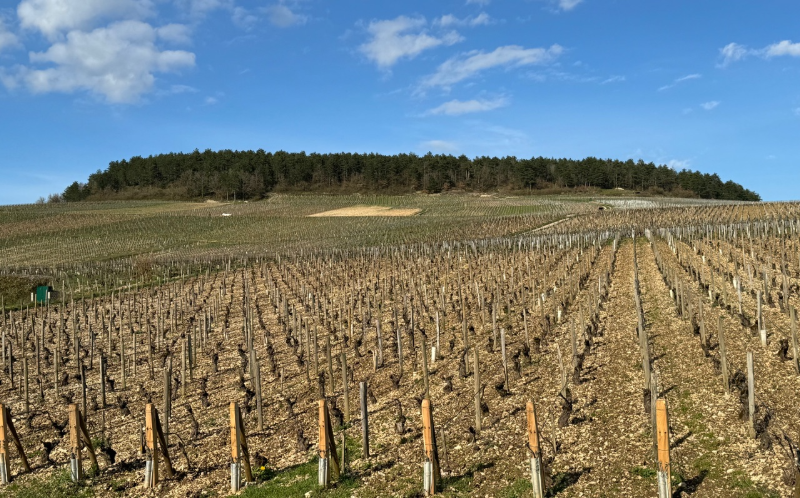
As I explained in Part 1 of this profile series, the Hautes Côtes is poised to take off as the next “in” Burgundy appellation because of climate change and affordable prices for vineyards: https://apsteinonwine.com/2026/01/02/the-hautes-cotes-the-next-hot-spot-for-affordable-burgundy-part-1/. Part 2 detailed some of the new producers who are taking advantage of the opportunities there: (https://apsteinonwine.com/2026/02/11/hautes-cotes-part-2-new-producers-in-the-next-hotspot-for-affordable-burgundy/… Read more

You can find a link to Part 1 of this series immediately below this paragraph. That article explored why the Hautes Côtes are poised to take off as the next “in” Burgundy appellation. In short, climate change has been welcomed in that location.… Read more

Editor’s Note: Our Senior Columnist, Michael Apstein, MD, FACG, is a gastroenterologist at the Beth Israel Deaconess Medical Center in Boston, a Fellow of the American College of Gastroenterology, and an Assistant Professor of Medicine at the Harvard Medical School. If some of the material in this column sounds familiar, it is because the author uses portions of an article published on this site on December 10, 2025, to explain why drinking wine may be beneficial to health.… Read more

I am excited by the current wines coming from Burgundy’s Hautes Côtes because they deliver the charm and weightlessness of Burgundy at prices that we 99-percenters can afford. So, I’ve broken down what would have been a very long article into two parts.… Read more

Editor’s Note: For this scientifically oriented article, I should note up-front the credentials of WRO’s Senior Columnist Michael Apstein, MD, FACG. Dr. Apstein is a gastroenterologist at the Beth Israel Deaconess Medical Center in Boston, a Fellow of the American College of Gastroenterology, and an Assistant Professor of Medicine at the Harvard Medical School.… Read more

Wine drinkers I speak to believe that “value” and “Bordeaux” don’t belong in the same sentence. There’s no question that the prices fetched today by the 60 Cru Classé wines are not bargains, except perhaps to the one-percenters. However, bargains do exist in Bordeaux, and they are easy to find.… Read more

Château Lascombes 2022 La Côte Lascombes Bordeaux 96
It appears that Axel Heinz aims to do at Château Lascombes what he did at Ornellaia and Masseto. My sampling the stunning 2022 La Côte Lascombes, the first vintage, tells me that he will succeed.… Read more

Domaine Huet 2002 Vouvray Demi-Sec Le Mont Loire France 95
by Michael Apstein
Domaine Huet’s stunning 2002 Le Mont Demi-Sec is a masterpiece at 20+ years of age, combining a near magical freshness with maturity. A luminous golden color announces its age, while its vitality belies it.… Read more

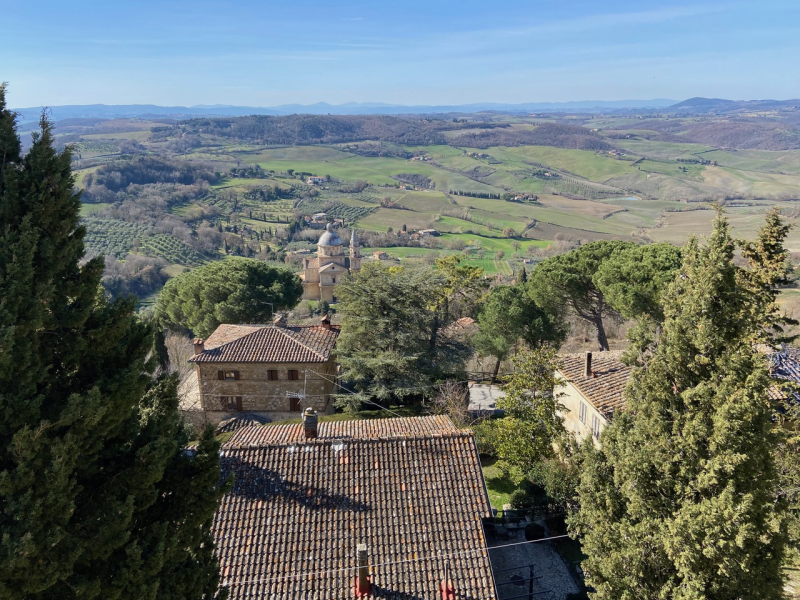
The calling card of Montefalco, a gem of a hill-town in Umbria, is Sagrantino, a grape that makes robust, high alcohol, tannic red wine. Earlier this year, the Consorzio Tutela Vini Montefalco invited me to their annual tasting that showcases their red wines, Sagrantino di Montefalco DOCG and Rosso di Montefalco DOC.… Read more
With hundreds of indigenous Italian grapes and an even greater number of Italian wines, selecting just one presents a challenge. But the reward is great. Italian wines can be as thrilling as any in the world. Plus, they are perfectly suited for food, and not just Italian food, and, for the most part, vastly underpriced given the quality and enjoyment they provide.… Read more

Sarah Hwang, whose family owns the iconic Domaine Huet in Vouvray, states emphatically, “Demi-sec is the strength of Vouvray.” Though the literal translation of demi-sec is “half dry,” wines labeled as such will have notable sweetness. What makes the demi-sec, and the even sweeter wines of Vouvray (plus other sweet wines from the Loire, like Coteaux du Layon or Quarts de Chaume) sensational is the riveting and balancing acidity that energizes the palate.… Read more
Louis Latour 1999 Corton-Charlemagne Grand Cru 100
by Michael Apstein
With their almost eleven hectares, Domaine Louis Latour is the largest owner of Corton-Charlemagne, the roughly 73 hectares Grand Cru located on the hill of Corton. (Bonneau du Martray is second with just under 10 hectares).… Read more

Get this. In Montefalco, producers actually use Sangiovese to soften Sagrantino, their signature grape. Remember, white grapes were used to soften the structured Sangiovese in the 19th century in the original Chianti recipe. That tells you pretty much all you need to know about Sagrantino, a grape that’s been described as the most tannic in Italy.… Read more

At 25 years of age, the 1999 Tignanello is a masterpiece.
Antinori’s Tignanello was a revolutionary, ground-breaking, and paradigm-shifting wine when it was released in the 1970s. Although the use of small French oak barrels (barriques), the incorporation of Cabernet in the blend, and the elimination of white grapes is now common in Chianti Classico, those ideas were unheard of at that time.… Read more

Conventional wisdom holds that grapes from old vines make better wine. The science behind that conventional wisdom is fuzzy, which of course, leads to a plethora of explanations. One sensible one is that older vines yield fewer grapes but that those grapes have more “oomph”—they’ve concentrated the same amount of energy into a smaller volume.… Read more
Clotilde Davenne 2022 Bourgogne Côtes d’Auxerre 93
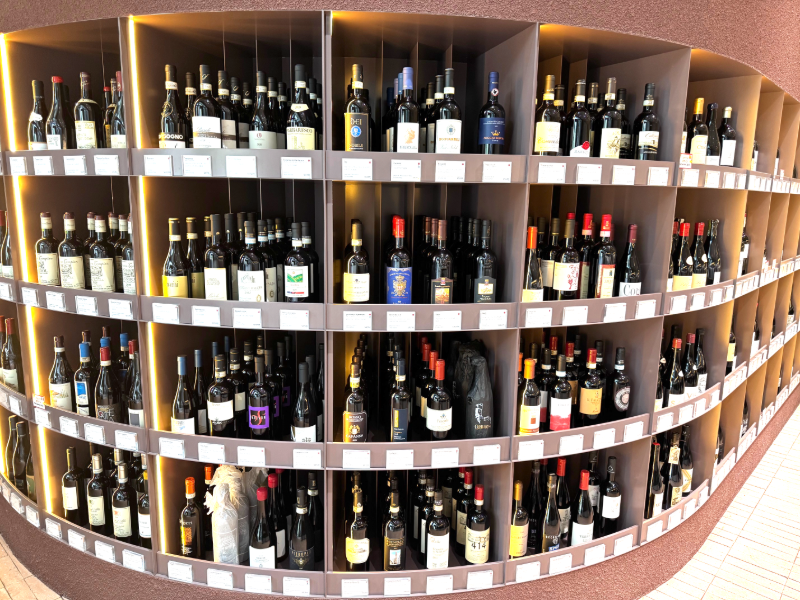
It’s common knowledge that Burgundy produces sensational, sought-after, and expensive wines. Less well known is that the region also produces excellent and affordable wines, such as this white Burgundy, that is currently available in the U.S.… Read more

In addition to Japan’s longstanding tradition of producing sake, the country has a burgeoning wine industry. Although sake is becoming more widely available in the U.S., Japan wine (koshu) is difficult to find here. One of the joys of coming to Japan in general and Tokyo in particular is to learn about these beverages and how they pair with Japanese cuisine.… Read more

Many wine journalists and sommeliers look down their collective noses at Tuscan Vermentino. They believe that the only “real” Vermentino comes from just a few specific locations: Sardinia (Vermentino di Sardegna, or the even more exalted Vermentino di Gallura), Corsica, or Liguria (where the grape is known as Pigato, most notably in Coli di Luni DOC).… Read more

Vino Nobile di Montepulciano, a Tuscan Sangiovese-based DOCG, just like Chianti Classico and Brunello di Montalcino, has never had the popularity of those other two areas. The 2021 vintage should change that.
Confusion surrounding the name might explain part of Vino Nobile’s underappreciated status.… Read more
The whole world, and not merely the wine world, lost a giant this month when Peter M.F. Sichel died peacefully at his home in Manhattan at the age of 102 and-a-half.
Peter’s life story is well-known. Born into a family of wine merchants—his grandfather founded H.… Read more

Chablis, although a part of Burgundy, has not yet received the memo that the wines should be priced in the stratosphere like their more southern cousins in the Côte d’Or. Except for a few producers, the wines from Chablis remain the great source for bargains in the category of white Burgundy.… Read more

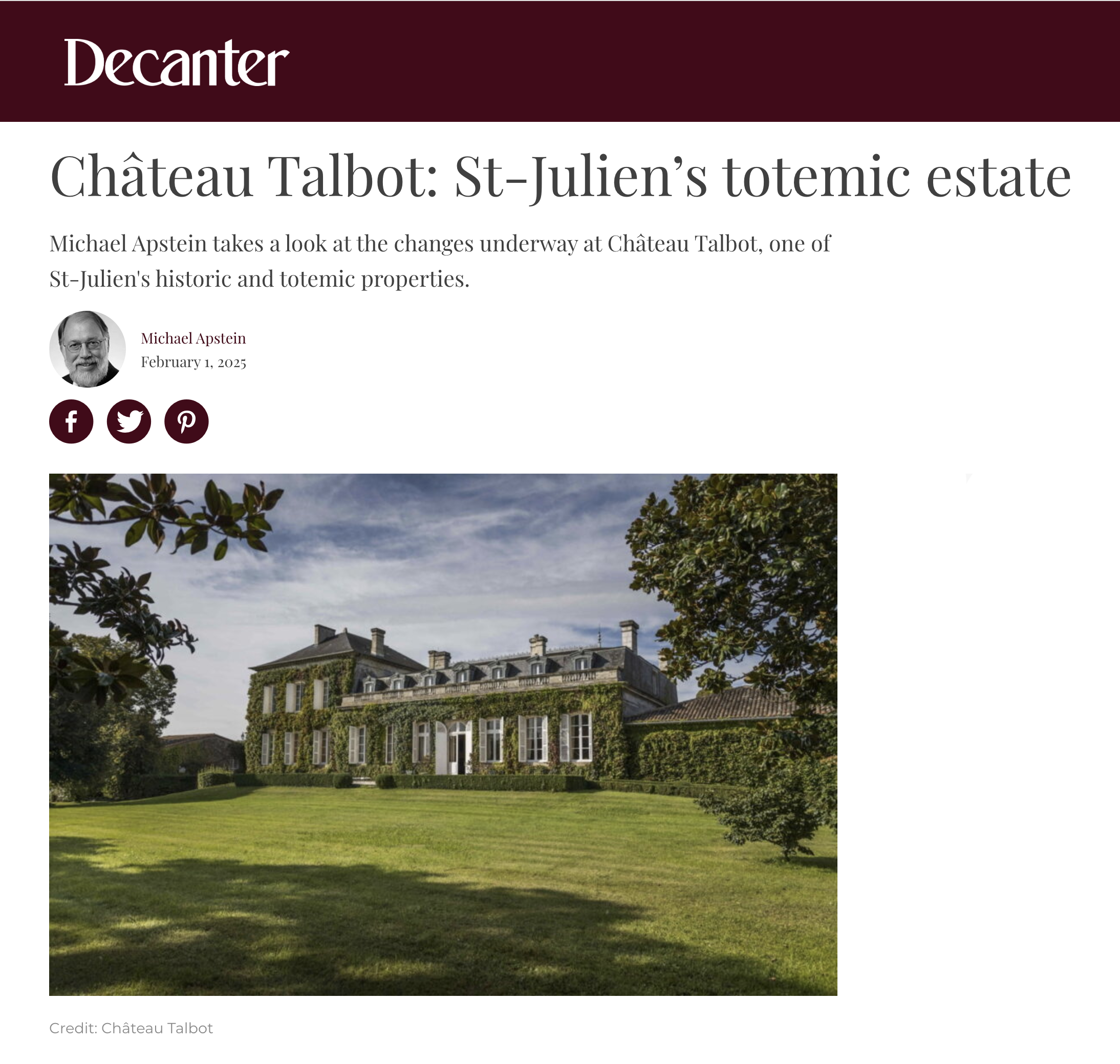
St-Julien is the quintessential expression of red Bordeaux, displaying grace and power without being overbearing.
It’s also the smallest of the major communes of Bordeaux and the one with the largest percentage of classified growths, as measured by acreage.
Indeed, 90% of the vineyards belong to the classified growths.… Read more

In the Mâconnais, Pouilly-Vinzelles and Pouilly-Loché finally received their deserved recognition with identification of Premier Crus vineyards, those sites that have the potential to produce superior wine. These two appellations now join Pouilly-Fuissé, the best-known Mâconnais village, where regulators identified 22 vineyards as Premier Cru starting with the 2022 vintage.… Read more

With the 2018 vintage, Chianti Rùfina introduced a new level of classification, called “Terraelectae,” to sit atop their pyramid of quality. With the 2020 vintage the Chianti Rùfina producers upped their game again by showing just how distinctive and noteworthy this new category of wine is.… Read more

They’re at it again: Domaine du Cellier aux Moines is putting Juliénas on the map with Mount Bessay.
The team at Domaine du Cellier aux Moines has reminded the world that great and distinctive wines can come from Givry (autocorrect, it’s not Gevrey) in the Côte Chalonnaise.… Read more
Indeed, I do not. During a week-long family vacation to Mexico City over Christmas last year, we drank a range of intriguing and excellent wines from Mexico, along with Tequila, Mezcal and beer, of course. My takeaway message, in addition to finding some surprisingly good Sauvignon Blancs, Nebbiolos, and orange wines, was the seeming attitude of “let’s see what works.” … Read more

Public health officials and scientists continue to debate whether moderate drinking is harmful or beneficial. There is no debate that heavy drinking or binge drinking is harmful to health. Both are.
In the late 20th century, there was a flurry of studies that showed—and a 60-Minutes television segment that popularised the idea—that moderate drinking protected the heart.… Read more
Wines from Alsace are labeled by grape, not place, which makes them unique among top quality AOC (appellation origine controllée) French wines. The French label all other top-quality AOC wines by place name—where the grapes grown—Chablis, Bordeaux, Sancerre, Pouilly-Fuissé—to name just four of the hundreds of names. … Read more
My friends say that I hate rosé. I don’t. I just think there are many far more interesting alternatives. (Here, we’re talking about still wine, not rosé Champagne, which is heavenly.) Most rosé is innocuous. “I’ll have a glass of rosé,” has replaced “I’ll have a glass of Chardonnay” as shorthand for “I want a glass of wine—I don’t need to know anything else about it.” … Read more
There’s no question that terroir—the concept that wines reflect the individual and unique site where the grapes grow—exists in Barolo. How could it not? With myriad growing plots differing by soil, exposure, and elevation, the Barolo DOCG produces hundreds of different wines, all from the same grape, Nebbiolo. … Read more

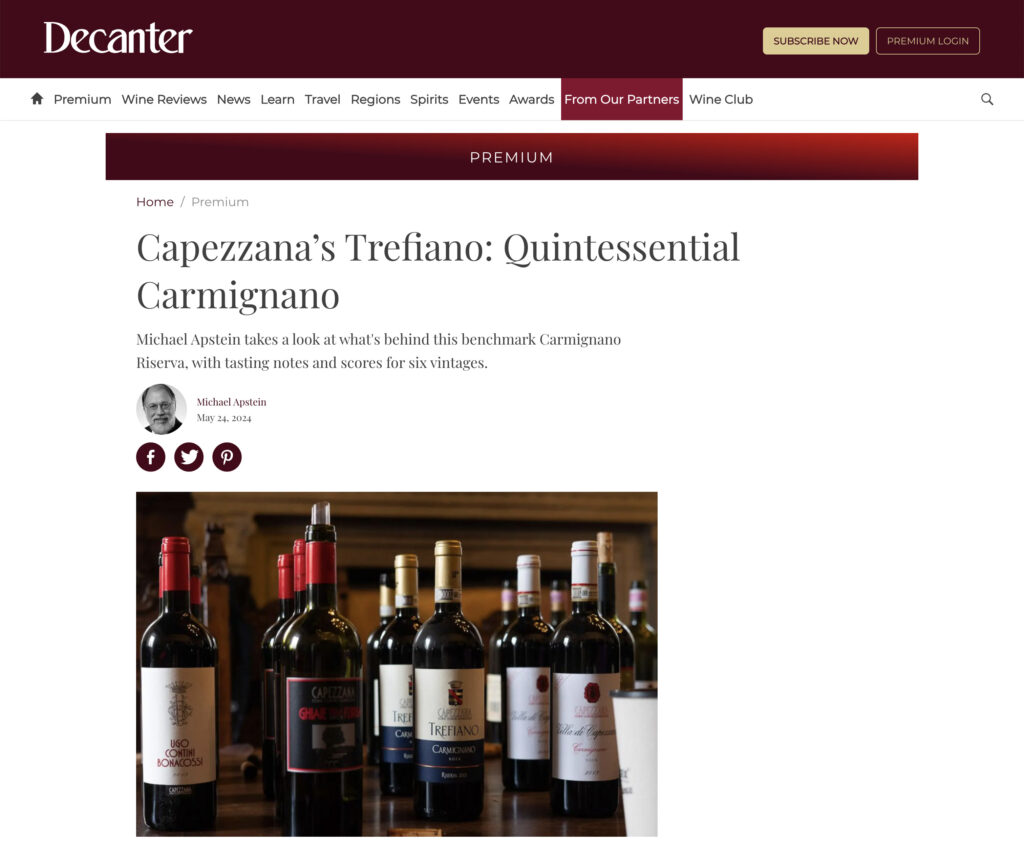
To celebrate the 40th anniversary of Trefiano – Tenuta di Capezzana’s stunning take on Carmignano Riserva – a vertical tasting of a handful of vintages ranging from 1988 to 2019 (the current release) was held in Florence this February.
In preparation for the tasting, I opened a bottle of the 2015 from my own cellar, so I have included my impression of that below, along with the wines from the tasting.… Read more
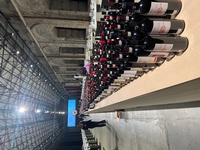
and 2022 vintages over two days reminded me why Chianti Classico is, justifiably, so popular around the world. The setting for the tastings was the venerable — and quite enormous — train station in Florence where every year the Consorzio Vino Chianti Classico (the organization that represents producers) presents some 700-plus samples of Chianti Classico spanning several recent vintages and all quality levels. 
It seemed ill-conceived. Matching upscale vegetarian cuisine with muscular Italian red wines. But, as is sometimes the case, the unconventional teaches a lesson—and this one taught two. Michelin three-star Eleven Madison Park with their plant-based food was the setting. Tenuta Sette Ponti’s Oreno, their flagship Bordeaux blend, was the wine.… Read more
Let me get straight to the point. The 2019 vintage for Brunello di Montalcino is fabulous! I make this assessment after tasting 35-plus examples of the recently bottled and released wines in New York City in November. There wasn’t a loser in the bunch. … Read more
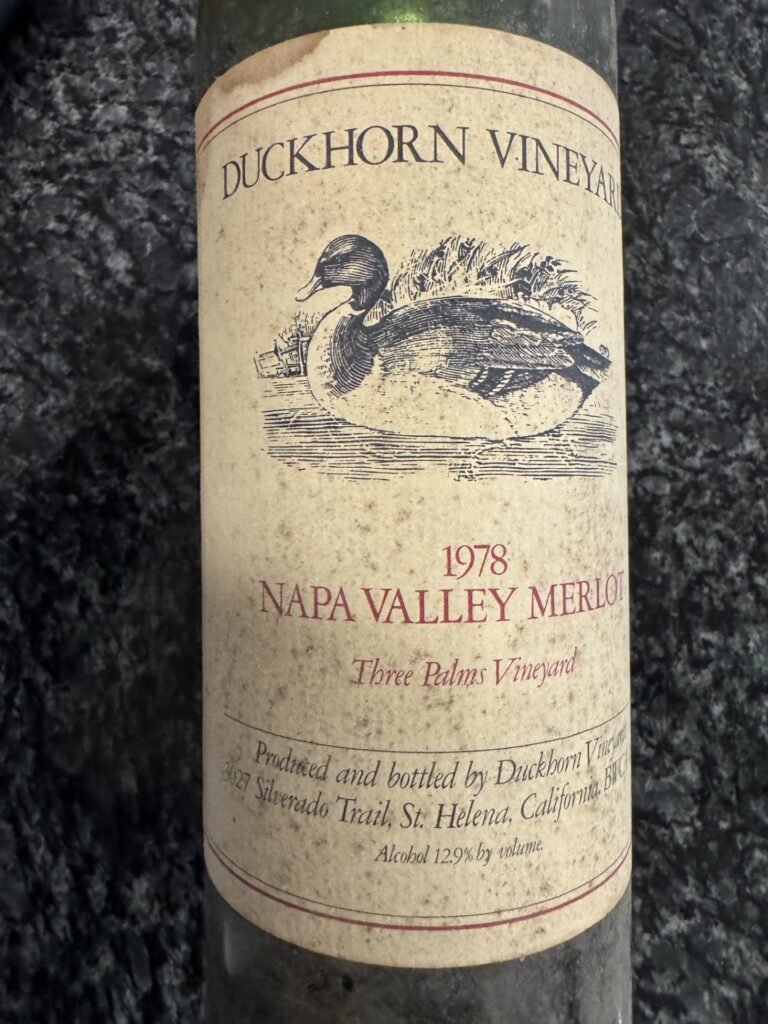
Duckhorn Vineyards 1978 Merlot Three Palms Vineyard Napa Valley California 97

Duckhorn Vineyards, founded in 1976 by Dan and Margaret Duckhorn, released its first wines two years later, from the 1978 vintage: 6,000 bottles each of a Cabernet Sauvignon and this Merlot.… Read more

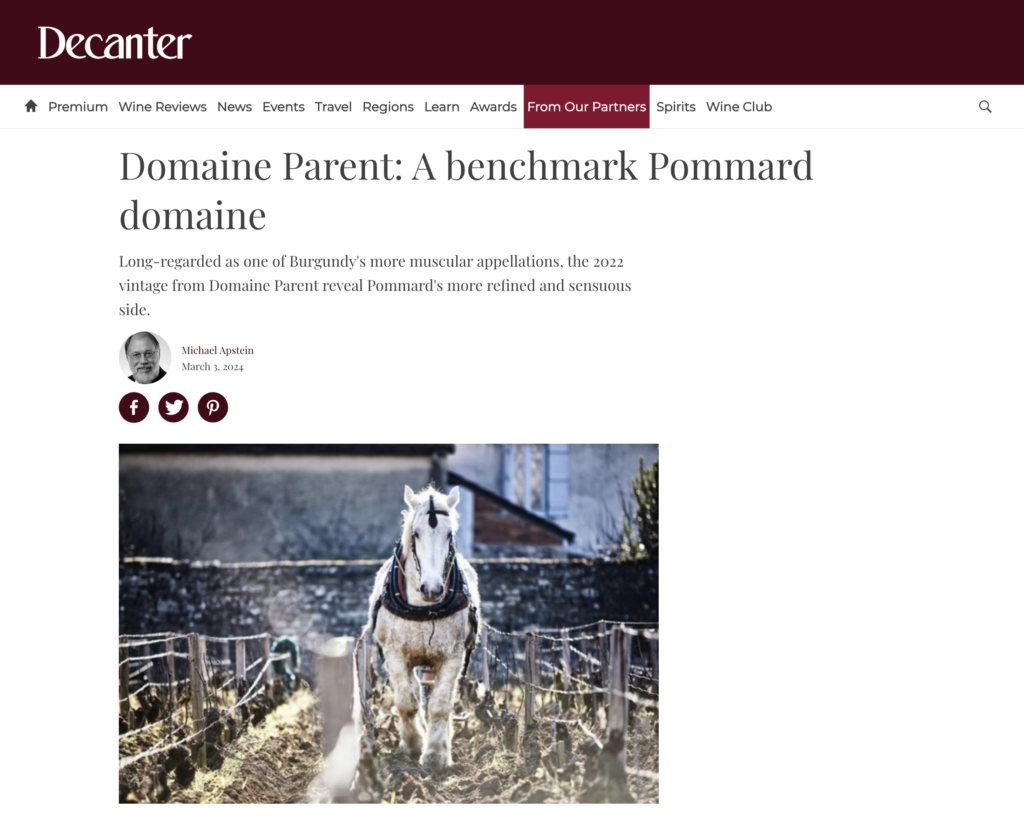
Long-regarded as one of Burgundy’s more muscular appellations, the 2022 vintage from Domaine Parent reveal Pommard’s more refined and sensuous side.
The wines of Pommard have long suffered from a less-exalted reputation compared to the more delicate wines of neighbouring Volnay, just to the south.… Read more
Let me cut directly to the chase, or rather, the bottom line: Buy as much of the 2022 Burgundies—both red and white—as your budget allows. I give this advice after having been astonished by the results of my annual tasting trip to Burgundy in November. … Read more
In recent memory, prices for Burgundy have seemed to defy gravity—they always rise. The prices at this year’s recently completed Hospices de Beaune auction, the 163rd, actually fell, demonstrating that gravity does exist there. The average price per barrel was €30,839 ($33,642), down 14 percent compared to 2022, but consumers may not notice any difference anytime soon because of the complexity of the market.… Read more
The wine world lost a giant last month. Miljenko “Mike” Grgich, the man who thrust California wine onto the world’s stage, died at age 100 at his home in Calistoga in the Napa Valley.
Grgich, more than anyone, is responsible for California’s reputation as a place that could make great wine when his 1973 Chateau Montelena Chardonnay took first place at a wine competition that pitted France’s best white Burgundies against upstarts from California. … Read more
Choosing the best of 2023 is easy for me—the marriage of both our daughters to men we like and admire. Of course, wine played a role in the numerous celebrations that accompanied the weddings. We uncorked and drank many birth year wines, 1988 and 1992, that I had purchased soon after the kids were born, which reminded me of important lessons that I’d like to pass on.… Read more
It’s amazing what money and dedication to a goal can do. Suntory, the Japanese multinational brewing and distilling company, purchased the neglected and run-down Château Lagrange (an estate classified as a Third Growth in the famed Médoc Classification of 1855) in 1983 for a reported 10 million U.S.… Read more

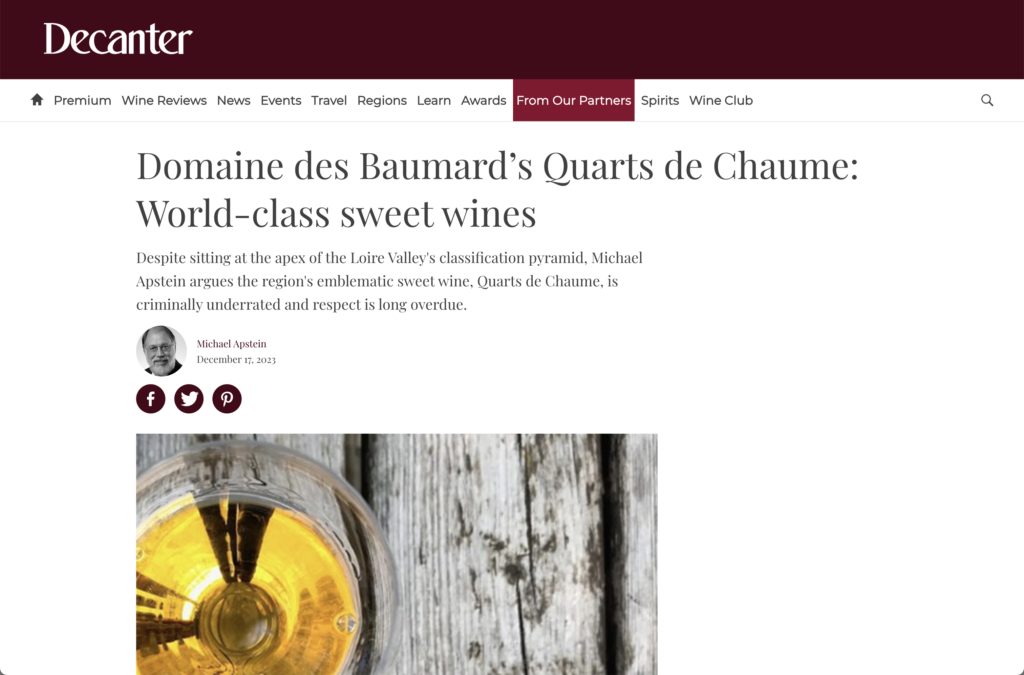
You can be forgiven if you are unfamiliar with the Quarts de Chaume appellation. After all, when I mentioned to a well-known wine-writer colleague based in San Francisco that I was writing about it, he said, ‘What’s that?’
The appellation should be on every wine lover ’s radar, because it’s home to one of the world’s greatest sweet wines.… Read more
The Guigal family, the elder Marcel and his wife Bernadette, and their son Philippe and his wife Eve, have always focused on site specificity in the great Northern Rhône appellation of Côte-Rôtie. It started in 1966 when they bottled wine separately from La Mouline, a 2.5-acre vineyard planted with both Syrah and Viognier, in an amphitheater on the Côte Blonde slope of the appellation. … Read more
No one wants to be second. Nobody strives to come in second. Second place is just not built-in to our DNA. For example, my daughter, a NCAA Gold Medal winner coxswain during college, referred to a Silver Medal winner—2nd place—as “the first loser.” … Read more
The French have always played an important role in the American wine industry. Burgundy-born Paul Masson started making wine in California in the late 19th century, followed by Georges de la Tour, founder of Beaulieu Vineyards, in 1900. The second wave started in 1973 when Moët et Chandon established Domaine Chandon in Napa Valley. … Read more
The French wine authorities, Institut National de l’Origine et de la Qualité (INAO), are notoriously rigid and immoveable. However, they are poised to change the pecking order in the Rhône, putting the wines from Laudun on a level, administratively, at least, with Châteauneuf-du-Pape and Gigondas. … Read more
Memorial Day means summer, which, of course to some people means rosé. But for me it means light to mid-weight white wines with energy, verve, and most of all, character. There are lots of French whites that fit that category, from zippy Muscadet to flinty village Chablis, to simple Bourgogne Blanc, to racy Sancerre. … Read more
Bordeaux‘s image and reputation comes from its red wines, which, after all, account for about ninety percent of its production. Rating the overall quality of the vintage is always based on how the red wines fared, without regard to the whites.… Read more